Wednesday, 12 October 2022

How can we play a wild card in a matrix game?

One of the important uses of a matrix game is to help us to unfold a future narrative. Almost by definition, that narrative needs to cover a long period in time, possibly decades. We have undertaken a number of matrix games within this time frame, but we have tended not to introduce wild cards. Our disinclination to play a wild card is based upon the belief that the outcome of the game should rely upon the actions of the players rather than the influence of some random event. This is possibly not a reasonable position to hold. In our Middle East matrix game, covering the period 2020 to 2050, it was pointed out that a 30-year period in this region without some form of seismic event was quite unlikely. The point was well made and led us to start to think about how we could introduce wild cards into a matrix game.

Perhaps it's best to start with what a wild card might be. In the world of futures, a wild card is defined as a low probability event that has a high impact. They are the type of event that have the capacity to re-shape the course of the future. For a more formal treatment of wild cards, see our paper from 2013 here: Playing the Wild Card (WFR 2013) As an example, the Covid pandemic could be seen as an archetypal wild card. A priori, it had a very low probability of spreading across the globe, shutting down whole economies, and disrupting societies at a global level. When it did just this, it had a huge impact upon us all. On the way we live, on the way we earn, and on the way in which we interact with each other. On a normal reckoning, one such event would occur within a given region of the world every 10 to 20 years. In a 30-year time period, we could expect one or two wild card events to occur. This is the case we have been persuaded by, and which we are to trial in our South China Sea game.

Our South China Sea matrix game is set to examine a potential course of geopolitical developments within the region over the period 2020 to 2050. During this game, we have decided that there shall be one wild card event. There are five dimensions to this that we wish to capture: what happens, how severe the event is, where it happens, in which turn it appears, and the number of players affected. We aim to undertake this at random using some form of randomiser, such as a six-sided die (a D6). We can unpack these five dimensions in turn.

The hardest part of the task is to identify six potential events. The significance of six events, as opposed to seven or five will be made apparent shortly. The six potential events that we have identified for the South China Sea region are: an ageing leadership structure with potential succession issues; a sequence of destructive earthquakes; a series of volcanic eruptions; a disruptive solar flare; the onset of a digital darkness; and a disruptive pandemic. Each of these events can be assigned a number from one to six, a D6 can be rolled, and that is the event we have to weave into the fabric of the game.

Whilst all wild card events, by definition, are high impact in the degree of destruction they wield, they are not all the same in intensity. Using one of the internal grading systems that we use for horizon scanning, there are six grades of intensity: high impact but low intensity; the event inspires corrective action; the event creates concern outside of the region; the event gets noticed at the global level; the event creates a lot of noise globally; and the event moves the needle globally. Once again, each of these degrees of intensity can be assigned a number from one to six, a D6 can be rolled, and that intensity of impact can be woven into the game.

There then arises the question of where the event takes place. Fortunately, most of the maps we use in our games are hex based maps, with the hex conveniently being a six-sided figure. Once again, each hex side can be assigned a number from one to six, a D6 can be rolled, and that location of impact can be woven into the game. We also need to consider the turn in which the event takes place. In a game of six turns, to each turn we can assign a number from one to six, a D6 can be rolled, and that timing of the impact can be woven into the game. Finally, we need to map the extent of the impact of the event on the number of players affected. In a nine-player game there is scope roll a D6 to assess the number of players affected and to assign the impact as emanating outwards from the epicentre of the impact.

This will give us the ability to weave a wild card into the scenario. The umpires will pre-determine all of these aspects of the wild card and apply them to the game. As the game is currently on-going, it would be better to lay this matter aside until the game is concluded. However, once the game is concluded, we shall return to highlight how we determined what to add to the game, how it was woven into the game, and how it may have influenced the game. But that is a story for another day.

Stephen Aguilar-Millan
© The European Futures Observatory 2022

Thursday, 23 June 2022

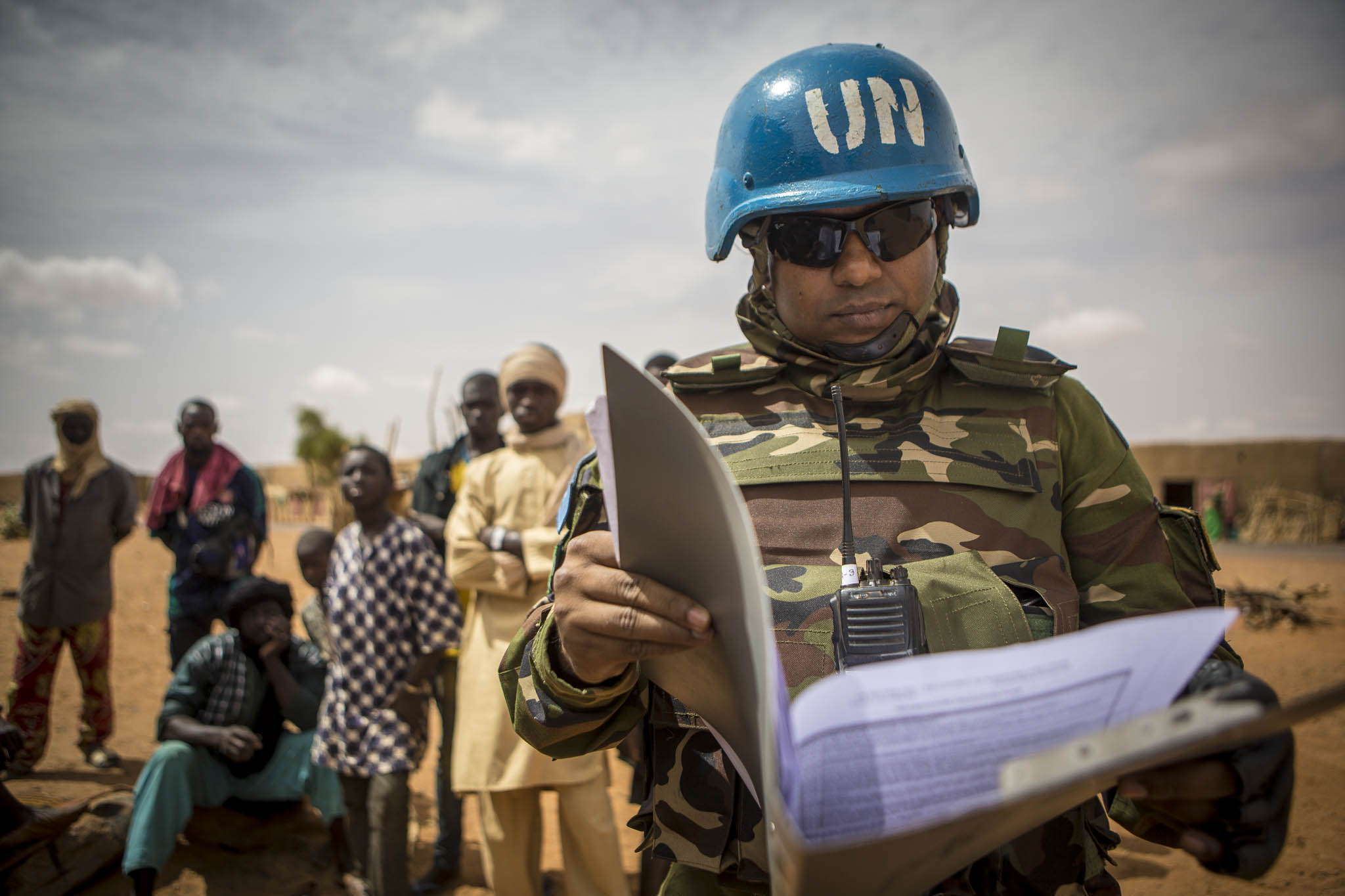
Has the United Nations run it's course?

The original purpose of the United Nations was to provide a forum through which peace could be maintained across the globe. In some regards, it has been very successful in this objective. There has not been a general conflagration at the global level since 1945. The wars that have broken out in the Post-War era have been limited in scope. The two major superpowers of the Cold War era - the United States and the USSR - whilst having a few contact points, generally stepped back from a full scale engagement.

Whilst having from the outset a peace-keeping and peace-making function, the United Nations, by design, did not have the means by which to undertake these functions. Right from the start, the UN was dependent upon the military inputs from the member states. This was the price paid for American involvement and support. Equally, the mission of the UN was broadened to include protecting human rights, delivering humanitarian aid, promoting sustainable development, and upholding international law. This was the price America paid to include the rest of the world.

The record of the UN since 1945 has been patchy. At times, it has been invaluable in co-ordinating international co-operation. It would be difficult to imagine Saddam Hussein being expelled from Kuwait in the absence of the UN providing the legitimacy of the action and the US providing the material means by which the expulsion took place. At other times, he UN has overseen a costly and embarrassing failure. One example that comes to mind is the genocide at Srebrenica, where the Serb military killed over 8,000 Bosnian men and boys, who were supposed to be receiving the protection of a UN force in a UN designated 'safe area'.  

If the record on delivering peace and security is mixed, the record on sustainable development is even more mixed. The UN embraced a set of Millennium Development Goals at a summit in the year 2000. These goals were supposed to be achieved by 2015. Largely, they weren't. The Millennium Development Goals were then followed by a set of Sustainable Development Goals that are supposed to be achieved by 2030. These are currently being missed to a large extent. The Sustainable Development Goals were further augmented by a set of Climate Action Goals. Adopted in 2015, these also are largely being missed. 

The record on upholding international law is a bit more positive. The International Court of Justice does actually function as a court of justice. It is well respected across the globe and it's judgements tend to bind the parties who are subject to the judgements. The International Criminal Court has been successful in prosecuting the perpetrators of crimes against humanity and the UN Convention on the Law of the Sea has established international maritime property rights and a means to enforce them judicially rather than militarily. This is a major achievement. Less of an achievement has been the role of the UN in promoting human rights. The number of countries operating through a democratic framework has declined in recent years. There is an increase in arbitrary detention and the over-riding of minority rights around the world. 

Taken in the round, the recent performance of the UN against its stated objectives leaves a lot to be desired. This is due to a number of factors. First and foremost is the variable support that members give to the organisation. Some are happy simply to pay lip service to the UN, others blow hot and cold over time towards it. It is difficult to maintain a long term programme when it can be buffeted about by short term considerations. The question of funding arises from time to time as some members baulk at paying their dues to the organisation, especially if it seen as giving voice to the adversaries of those members in question.

It would be fair to say that the UN suffers from a general lack of respect at the political level. It is used as a convenient tool at times, and as a mere inconvenience to be ignored at others. A case in point might be the mission of Secretary-General Guterres to broker peace between Russia and Ukraine. After being given a frosty reception in Moscow, the Secretary-General was met in Kiev by a Russian missile salvo. This represented a demonstration of Russian contempt for the office, secure in the knowledge that it could veto any motion of censure the organisation might be tempted to propose.

It is the mixture of contempt and ineffectiveness found in the UN that causes some to question whether or not it has run it's course. The structure of the UN reflects the political realities of 1945. There has been a little bit of updating over the years, but the current structure of the organisation is at serious variance to the contemporary political reality. The organisation stands in need of a significant update, but renewal is nowhere to be found. 

This leaves us in an interesting position. The UN doesn't command the respect that it needs. It largely struggles to achieve its stated objectives. It reflects a world that no longer exists. It has spread itself thinly over a wide ranging number of issues, and it can't command anywhere near as many resources as required for their delivery. In the light of this, perhaps the United Nations has run it's course? Perhaps winding it up would be better than it collapsing? Whichever, the future is bound to be quite different from the past.


Stephen Aguilar-Millan
© The European Futures Observatory 2022
Thursday, 9 June 2022

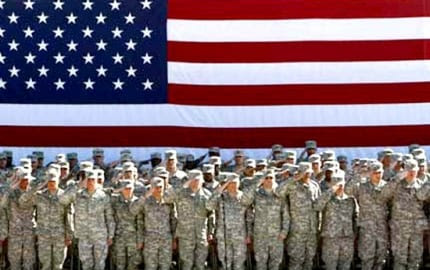
Has America squandered it's unipolar moment?

With the dissolution of the USSR in 1991, the world was left with a single superpower - the United States. This situation created great opportunities for the US. America occupied a position of undisputed military and diplomatic pre-eminence. The US economy was the key driving force in the global economy. America set the rules by which the world traded, interacted, and dealt with each other. The US Dollar was the de facto global currency and the American banking system provided the financial plumbing through which the world became more integrated. US technology rose to dominance and the internet - largely an American invention - helped to shape the modern world. Such ascendancy begs the question of how that power would be used? Would it be used for the benefit of the US? Would it be used for the benefit of the wider global community? 

The USSR and Warsaw Pact started to dissolve into a number legacy states, some of which functioned normally as members of the international community (Czechoslovakia is an example here), others became failed states (Yugoslavia springs to mind here). More thoughtful Americans realised that this zenith moment was unlikely to last for long. New challengers were emerging, especially in East and South Asia, and the old challengers could well find themselves revitalised. For those of this view, a short period of dominance had arisen to allow the United States to determine the global architecture for the twenty first century. Such ambitions would require a degree of sacrifice on the part of the American people, as they needed, on occasion, to sacrifice their narrow interests for the interest of the wider global community. This has turned out to be too much to ask.

The period of global dominance started well. George Bush Sr (known as 'Bush 41' - the 41st President of the United States) was an internationalist who believed in consensus building and collective operations as the basis for action. He was followed by President Clinton for two terms, who continued much along the same lines. A sharp discontinuity arose with the election of George Bush Jr (known as 'Bush 43'). Whereas Bush 41 represented the old patrician approach to foreign affairs, Bush 43 advanced an agenda more in tune with the Neo-Conservative agenda. Bush 41 advocated a consensual, collegiate, approach to dealing with international issues. In contrast, Bush 43 followed a more unilateral path, ignoring collective institutions such as the UN and NATO, except when it suited him to use them. The contrast is most stark in their dealings with Saddam Hussein of Iraq. Bush 41 built an international consensus around dealing with the invasion of Kuwait, sanctioned action through the UN, and then limited the use of force to simply liberating Kuwait. Bush 43 did none of this. He invaded Iraq almost unilaterally, and certainly against the advice of his NATO allies. He gained a flimsy sanction of legality from the UN and then went on to preside over the abandonment of core American values. He did this because he could and there was no other agency capable of stopping America.

It is the abandonment of core American values in Abu Ghraib and the detention centre at Guantanamo Bay that marks the turning point in the American unipolar moment. The foreign policy of the United States has traditionally been value driven. It seeks to promote liberal democracy, respect for individual liberties, and traditional market based economics. From a political dimension the actions of the US government in the international arena under Bush 43 fell far short of this ideal. It is inconceivable that Bush 41 would have allowed any of this behaviour to occur whilst he was president. A comparison of the two Bush presidencies shows how far we have travelled. 

Bush 43 was followed by President Obama for two terms. He came to office promising a change. That change didn't come. Guantanamo Bay is till open and claims that the US is following a moral foreign policy still ring hollow. Obama personally oversaw the extra-judicial killing of Osama-Bin-Laden rather than his apprehension and trial. This indicated that there would be no return to a principled foreign policy. Obama was followed by President Trump, who even abandoned the rhetoric of Obama in the exercise of naked power. This is now having unfortunate consequences for America in the world.

Over the same period that The United States enjoyed its unipolar moment as the sole superpower, the tectonic plates of the world economy were shifting. The biggest change was the rise of China from being the 10th largest economy in 1990 to being the 2nd largest economy in 2020, and set to overtake the US later in this decade. With the economic rebalancing has come political, diplomatic, and military rebalancing. Away from the US and in favour of China. We no longer live in a unipolar world and more of a bi-polar one. Again!

It is time to take stock and see where we are before assessing how America has used it's unipolar moment. President Biden has taken office at a time of weakness for the United States. President Trump managed to antagonise many of the traditional allies of America, whilst appearing to favour those who didn't quite share the values of the West. President Biden has inherited that legacy. His term started badly when the Americans were chased out of Afghanistan by the Taliban and their anointed Afghan government collapsed with minimal resistance. 20 years of war and little to show for it. This was followed by the Russian invasion of Ukraine, a war which continues to rage as I write. The response of America and the European allies has been to sanction Russia, the consequence of which is a large and growing Russian trade surplus. All this has done is to underscore how much America needs China to enforce it's policy. However, the confrontation with Russia is a bit of a distraction. The main confrontation will be with China. How that may turn out is a matter for conjecture.

The main point is that the US has experienced a period of time where is has enjoyed undisputed power. That moment has passed. China is now strong enough to oppose US policy and offers a credible alternative to those nations who are not inclined towards the western agenda. The abandonment of the US values driven foreign policy by Bush 43, and it's continuation by Obama, Trump, and Biden is starting to feel like a self inflicted wound as the wider world falls out of love with America. It needn't have been like this. Had the trajectory set by Bush 41 and Clinton continued, the US would have been in a much stronger position today than the one in which it now finds itself. It is this loss of moral authority that will cost America dearly in the decades to come. 

This is unlikely to change. Bush 43 acted as he did because the American people wanted him to. The issue of climate change provides an example of how this has played out. Clinton signed America to the Kyoto Protocol to limit global warming. On taking office, Bush 43 took the United States out of the framework. This was because he couldn't ensure that the Senate would ratify the treaty, which was because the Senators had been pressured by their constituencies to reject the framework. On this matter, when it came to the key moment, the United States, reflecting the American people, placed their narrow sectional advantage ahead of the common good. This is another example of how America could have shown leadership, but failed to do so.

In the end, the unipolar moment has come and gone. There is little tangible to show for this former dominance. International institutions more frequently fail to have an American flavour to them. The American president is unable to call to heel those countries that act against US interests. It is even arguable that the spread of liberal democracy, the respect for the individual, and a belief in market based economics has halted, or even, to a degree, reversed. In this respect, it feels as if the American unipolar moment has been squandered.


Stephen Aguilar-Millan
© The European Futures Observatory 2022


Thursday, 31 March 2022

Could The War In Ukraine Break The Global Food Supply Chain?

One month into the war in Ukraine and some of the second and third order effects are starting to become evident. The disruption to Russian energy supplies are already being felt in the oil and gas markets. However, while these attract our attention, there are also little noticed changes that could have a much deeper impact. We have yet to tease out fully the impact of the war - or special operation, as some like to call it - upon other markets and other regions of the world. One such market is that of foodstuffs, and one such region is North Africa and the Middle East.

The combined output of Russia and Ukraine represents just under a third of the global supply of wheat. The war is likely to disrupt this supply both in the short term and the long term. In the short term, the amount of acreage under cultivation in Ukraine is likely to fall owing to the war. Even if, a 2022 harvest is gathered, the disruption of the Black Sea ports - Odessa, Kherson, and Mariupol - is likely to interrupt significantly the flow of wheat. If Russia increases its acreage by a compensating amount, this is unlikely to have an impact on global wheat markets because of difficulties in accessing letters of credit and counter-party trade to actually deal in Russian wheat. There is also the possibility of a Russian export ban for wheat, except to favoured customers.

All of this suggests a bit of a hole in the supply of wheat in the short term. It could be offset by drawing from reserves, but these are about a third below what would be considered normal. It is not only the wheat market that has come under pressure. Other grains, such as barley, and sources of vegetable oil, such as sunflower, are dominated by Russia and Ukraine. Prices of these 'soft' commodities are already rising by very large amounts (30% between the invasion of February 24th and mid-March).

There are further concerns about the long term consequences of the war upon the acreage under cultivation. In recent days, there has been some discussion about the possible use of NBC (Nuclear, Biological, and Chemical) weapons in the context of the war. The long term consequences of using such weapons is at present unknown. The fear is that their use would poison the soil for some time to come - possibly decades, possibly generations. If that were to happen, then we would be thinking of a permanent reduction in the acreage under cultivation rather than a temporary one. This would lead us into a much different world than the one we are accustomed to.

In addition to issues around the acreage under cultivation, there are also more general issues around global arable yields. Russia and Belarus - both suffering from international sanctions - are leading suppliers of potash, a key ingredient in modern fertiliser manufacture. Modern agriculture is heavily reliant upon mechanisation - which faces increases in the cost of fuel - and fertilisation - which relies on products which originate in Russia. Arable products are then, in turn, used as animal feedstuffs. It is not difficult to see that the cost of all foodstuffs are set to rise in the very near future.

It is possibly even more disturbing when we consider where these impacts might be felt. Much of the Russian and Ukrainian grain harvest is transported across the Black Sea to Turkey, where it is processed from the raw grains into a state where it can be sold to the consumer. The processed grains are, in turn, shipped on largely to the Middle East, North Africa, and parts of Asia. Something in the region of 800 million people rely upon this source of grains. These are rather volatile parts of the world. It is not beyond our imagination to envisage a Second Arab Spring. It was the rise in food prices that fuelled the original Arab Spring of 2011.

The western response to this is likely to be - as it was a decade ago - inadequate. It does, however, create an opportunity for Russia, which has a footprint in the region, and China, which has ambitions in the region, to extend their influence even further than they already have. Europe and North America could counter this, but one wonders if they are prepared to devote levels of financial resources that are commensurate with those of, say, the BRI? 

Whether this possibility constitutes a break in the global food supply chain is a matter of conjecture. It does suggest a different future from the past which we are accustomed to. There is the possibility of an increasingly hungry world, which creates the potential to use food aid as a source of soft power. In that case, politics would replace commerce in deciding who gets to eat and who goes hungry. 


Stephen Aguilar-Millan
© The European Futures Observatory 2022


Monday, 14 March 2022

Ought Taiwan To Be Concerned By Events In Ukraine?

Taipei recently suffered a power outage. Such is the uncertain nature of the world at the moment that our first thoughts were around the possibility of a Chinese cyber-attack on Taiwanese critical infrastructure. Was this the prelude to an invasion? No, it was simply an outage in power supply. However, it does underline how events in Ukraine can have a knock on effect elsewhere in the world. What exactly are the repercussions for Taiwan after the Russian invasion of Ukraine? Why are we nervous at this particular time? And what are the prospects for a Chinese invasion of Taiwan?

From a Chinese perspective, the Russian invasion of Ukraine offers a number of points to consider. They fall along two lines - the prosecution of the military campaign by Russia and the reaction of the US and other western allies, especially of NATO. The military campaign has appeared to have stalled in the first two weeks. This could be deliberate on the part of the Russian forces - they may be waiting for better ground over which to advance their motorised vehicles. It could possibly be the result of limited Russian war aims, although this seems unlikely. Or it could be the result of poor military planning and issues around logistics and re-supply. In the weeks to come, we shall find out which is which. For now, the war has assumed a character of the medieval - slow paced, siege operations, and a high degree of brutality inflicted upon the civilian population.

What have been effective in Ukraine are portable, hand held, anti-armoured vehicle and anti-aircraft missiles. This is not too surprising. These weapons were effective in Afghanistan against first Russian and then against NATO and American targets. The nature of potential Chinese operations in Taiwan - sea-borne and air-borne assault - does suggest what is known as a 'target rich environment'. It is true that China would be able to access overwhelming force, but the ability to deploy it is entirely a different matter. The lesson in Ukraine suggests, so far, that the balance has shifted to the defence and away from the attack. This increases the potential price of initial military action and the costs of occupation.

One factor that must weigh heavily in Beijing is the political cost of failure. If China were to attack Taiwan and fail to achieve the military aims, would the current regime survive? Would the present leadership be replaced by a different set of leaders? Or would this be a signal to replace the Communist Party of China altogether? These are very high stakes indeed. Reflecting this point onto the war in Ukraine, could we be seeing the endgame for President Putin?

The response of the US and European allies has been to detach Russia from the global economy. We have yet to see how successful that will be. Russia has not been abandoned by its Asian allies - China, Iran, and India - but the sanctions have started to have an impact. Since 2014, President Putin has focussed on building a siege economy that is disconnected from the global economy to a larger extent. We shall now see how successful that policy will be. The freezing and seizure of Russian assets in Europe and America has changed the game somewhat. It is inconceivable the China isn't taking note here.

For decades China has recycled its trade surpluses into US Treasury bonds. If these can be frozen and seized at short notice, that suggests that America is an unreliable partner to financial counter-parties. For the last five years, we have seen China re-cycling the US Treasury holdings into US Dollar loans to emerging nations. That process is likely to accelerate in order for China to diversify the overseas portfolio away from the US. It will lessen Chinese vulnerability to the US seizure of Chinese financial assets in the US. However, it has a knock on effect that might ultimately act to the detriment of America. If the US gains a reputation for being an unreliable banker - limiting convertibility, refusing repayment, seizing assets in custody - then the US will lose it's appeal as an international financial safe haven. This will hasten the decline of the US Dollar as the global reserve currency.

China has seen this and has acted in two ways. The first is a policy of increasing self-reliance. Whilst not a fully fledged siege economy in the style of Russia, China has followed a policy of dual circulation, which draws a distinction between the economy at home and the economy abroad. The former has been developed, whilst the latter has taken on a more strategic dimension in recent years. Allied to this is the second core policy, that of restricting the convertibility of the Renminbi. China's financial system is not sufficiently robust for the Renminbi to develop into a fully fledged reserve currency. Whether it ever will is an interesting question. For now, China is content to allow the US Dollar to retain that status.

America, by following a policy of containment and disengagement, is supporting the process of dual circulation. By distancing itself from China, the US is facilitating the process whereby China - and the inner core of nations over which it has influence - become largely self-sufficient and only has contact with the world outside of its sphere of influence for trade. That trade is normally on its own terms. This is where Russia has aspired to be prior to the war in Ukraine. The downstream effectiveness of this policy is now unfolding before us. I would imagine that Beijing is watching very closely.

Turning back to Taiwan, if we have a China that is largely disengaged from the process of globalisation, either as the result of Chinese policy or American diplomacy, then Taipei ought to be concerned by events in Ukraine. However, there are two factors working against this. First, the policy of dual circulation may not be effective. It may be impossible for China to completely disentangle itself from the global economy. To that extent, there will remain sensitive points where sanctions against China could have some impact. Second, a military campaign against Taiwan might not be successful. Indeed, the failure of that campaign might herald more radical changes on the mainland.

In the past, the Chinese leadership have been aware of the risks involved over Taiwan. This has led them to be cautious, even in the face of a perceived weak and ineffective US President. Even if Ukraine proves to be an absolute disaster for the US and NATO, that still may not encourage China to become adventurous in Taiwan. When given the choice, China prefer to stick rather than twist.

Stephen Aguilar-Millan
© The European Futures Observatory 2022

Monday, 28 February 2022

Is A New Heartland Emerging?

The concept of the Heartland is usually associated with Halford Mackinder. Mackinder, an Edwardian geographer, suggested that the bulk of the Eurasian landmass could dominate world history and that the core of that landmass constitutes the 'Pivot of History'. He pointed to the development of technologies of integration - the railways, the telegraph, road transportation improvements - to support his thesis. His geopolitical contention was that if an integrated core could develop, it would dominate the world.

Subsequent events showed the thesis to be flawed. The maritime powers - first Great Britain and then the United States - came to dominate the twentieth century. The Heartland fell into relative backwardness as sea power came to dominate land power. The core proposition of the thesis - that the key to world dominance was to control Eastern Europe - proved to be flawed as the Austro-Hungarian, Nazi German, and Soviet Russian empires all collapsed despite controlling Eastern Europe. It was the maritime powers and the powers of the European 'Rimland' that dominated the twentieth century.

Events in the twenty-first century could run somewhat differently. The first quarter of the century has been dominated by the rise of China. Despite ambitions in the South China Sea, China has shown itself to be more of a land power than a maritime one. The expansion of Chinese influence through the keystone of the BRI programme has been directed towards growing her land power rather than sea power. Observers in the west have focussed upon the expansion of the Chinese navy, but this may prove to be something of a misdirection because the focus of Chinese investment has been upon developing land routes between the Far East and both Europe and Africa.

We consider these to be important developments, into which we have put some effort in gaming. There have been three areas of our gaming focus so far - the Arctic, Central Asia, and the Middle East. In Mackinder's day, the Arctic was written off as inaccessible. With the climate warming, the Arctic ice cover is melting, giving rise to the Arctic Ocean becoming a transit route between the Far East and both Europe and the North American seaboard. This is a possibility for the future. For the present, there are the tangible trade routes across Central Asia and the Middle East into Europe. This has been the focus of Chinese investment.

As a fact of geography, the Caspian Sea causes the rail and road corridors from China to pass first through Central Asia, and then either through Russia and on to Europe, or through Iran and Turkey into Europe. This would naturally suggest that relations between China, Russia, Iran, and Turkey are of relative importance. These commercial factors that pull the four together have been enhanced by the actions of the United States and the European nations.

A growing hostility towards China on the part of America and Europe could have left China rather isolated. Instead, a confrontational approach to Russia has forced both China and Russia to share a number of common interests. This confrontational approach has been extended to Iran over the use of nuclear technology, again acting as a stimulus for closer relations between China, Russia, and Iran. Turkey is a slightly different case. For over two decades Europe has held out to Turkey the prospect of joining the EU. This prospect has come to nothing and Turkey now realises this. In a national re-appraisal, Turkey has decided to become more of an Asian nation and less of a European one. This, accompanied by a degree of antipathy from the US, has guided Turkey into the orbit of China.

The prospect of stronger ties between China, Russia, Iran, and Turkey in the years ahead naturally leads us back to Mackinder's Heartland Theory. Could this grouping of powers come to dominate the world? If so, what could possibly prevent it? As things stand, both Russia, Iran, and Turkey are becoming more assertive about their interests. The response of the US and Europe is an ever growing array of sanctions. However, given the size of China in the global economy, sanctions need the co-operation of China to be fully effective. A point in time is coming where it would be advantageous for China, Russia, and Iran to develop an alternative financial framework using a currency other than the US Dollar. This would be a pivotal moment, and in the absence of a degree of renewal of the West, it would signify the growing dominance of the Heartland powers.

What could be the basis of western renewal? The single word answer is 'productivity'! The basis for the growth in Chinese power, which underwrites the BRI and the development of the Heartland, is economic development as a global power. Europe and North America does not have a large pool of unproductive labour on which to draw, but they could leverage such pools on the Indian Sub-Continent and Africa. Interestingly enough, China is doing exactly this in Pakistan and various African nations. In this world, if Europe and North America continue to be inward looking and self-absorbed, it will be at their cost in the longer term. It is certainly the trajectory on which they are currently travelling.

There is a strong argument that a new Heartland is emerging. Driven by China, with the active support of Russia, Iran, and Turkey, it is likely to be a feature of the twenty-first century. Exactly how Europe and North America responds to this will shape our common futures. At present, the new Heartland appears to be in the ascendant.


Stephen Aguilar-Millan
© The European Futures Observatory 2022


Thursday, 17 February 2022

Xi Turns West - The Lessons Learned

At the end of a game that has been designed, nurtured, and umpired, it is useful to sit back and reflect on the lessons we have learned from it. There are two dimensions to this. What lessons of game design stand out? And what lessons about the subject matter stand out? In this case, the former question is just as useful as the latter. Normally, we ask what a game has taught us from the perspective of the subject matter. However, in this case, because we were trying to do things that were new to us, it is also worth spending time on the structure of the game design.

The most significant observation made to us was that China rather had an easy time of it within the game. The United States was unable to leverage an effective degree of opposition to Chinese ambitions in the region. Part of this may be down to gameplay, but far more of it would be down to the case that a disengaged America has far fewer assets to play with in the region. The United States could have orchestrated Saudi resistance to Iran, especially in Syria, as a means to counteracting Russian influence, but there was very little incentive for Saudi Arabia to adopt that cause.

The Chinese objectives were fairly straightforward - build a railroad. To achieve this, as a matter of game design, China needed to orchestrate Iran, Russia, and Turkey. This happened in the game because the priorities of the players were reasonably aligned. However, what options to China were available if, say, Turkey decided to look west rather than east? A renewed Turkish commitment to NATO would certainly have altered the calculations of the BRI. Perhaps this could have been encouraged by exacerbating Turkish suspicions over Russian intentions in the region? That's an interesting possibility that could be explored in future runs of the game.

Within the game, Iran wasn't a particularly aggressive regional player. This was more gameplay than game structure because the Iranian player had the opportunity to be more aggressive in their approach, but decided not to be. Boosting the Iranian economy and strengthening Iranian civil society meant that Iran was fairly secure internally. By courting China and Russia, Iran achieved a degree of external security as well. As interesting point of uncertainty concerns what could have happened had Iran been more aggressive over, say, the partition of Iraq? By 2050, Iran controlled much of eastern Iraq and Iraqi Kurdistan. It is interesting to speculate on how relations with Turkey would have resulted had Iran been more expansionary within the region. Would Turkey have allowed this?

What we did see is the rise of Iran from being a local actor to being one with a far larger regional footprint. As the custodian of the Shia inheritance, Iran counter-balanced the Sunni guarantor - Saudi Arabia - quite well. We didn't write too much of this conflict into the game and it didn't reveal itself as part of the gameplay either. In this sense, this aspect of the game remained quite underdeveloped. In future run throughs, perhaps this aspect could be brought into stronger focus?

The game was designed to explore some aspects of unitary government - as opposed to federal government - within the region. Unsurprisingly, we found that unitary government in conjunction with strong backers gave a more stable result than a federal structure without any strong focussed backing. Syria, with the backing of Iran and Russia, fared a lot better than Iraq, which received the lukewarm support of a largely disengaged United States. The disengagement of America created a power vacuum into which China expanded her influence, Iran extended her control of the region, and the Kurds had a go at forming an independent Kurdistan. In this sense, the game achieved the result that had been baked into the design of the game. However, are we convinced by the outcome?

That raises the broader question of how satisfied we might be with the results of the game? We were quite pleased to see that a US withdrawal from the region created a power vacuum into which Chinese influence flowed. The main beneficiary of this was Iran. The way the BRI is structured, China plans to exert influence over a territory rather than occupying it, which means that China is always in need of local partners. The ascendancy of Iran fits this role very well. We found this aspect of the game to be quite convincing.

Hanging around that were the responses of Russia, Turkey, and Saudi Arabia. The protection of China helped the relationship between Russia and Iran. Chinese and Russian interests were reasonably well aligned as time wore on. We found this convincing. The game didn't expose the fragility of western sanctions in the face of Chinese support, which is something we would have liked to see develop. It would have provided an alternative financial and commercial structure into which Syria and Kurdistan could well have played. There is also sufficient scope to draw Turkey into such a framework.

To do so would have given Saudi Arabia an awkward choice. On the one hand, Saudi policy could remain wedded to the present structures - deeply engaged with the US and underwriting the Arabic world. On the other hand, with the US disengaging in the region, retreating into a core heartland south of the Persian Gulf and allowing Iran, more or less, a free hand north of it. Whilst not entirely convinced by this outcome, it does, at least, seem plausible.

The game generated an interesting vision of the region in 2050. The currents are incredibly complex and there are many moving parts, so we are uncertain that we generated a stable baseline for exploring the future of this region. It feels as if the same game played again would generate entirely different results. This is probably a good thing because it does speak to the complexity and instability of the region. However, of one thing we are certain, if the BRI is to extend south of the Caspian Sea, China will have to impose some sort of order to the region. That alone makes the game both interesting and important.


Stephen Aguilar-Millan
© The European Futures Observatory 2022